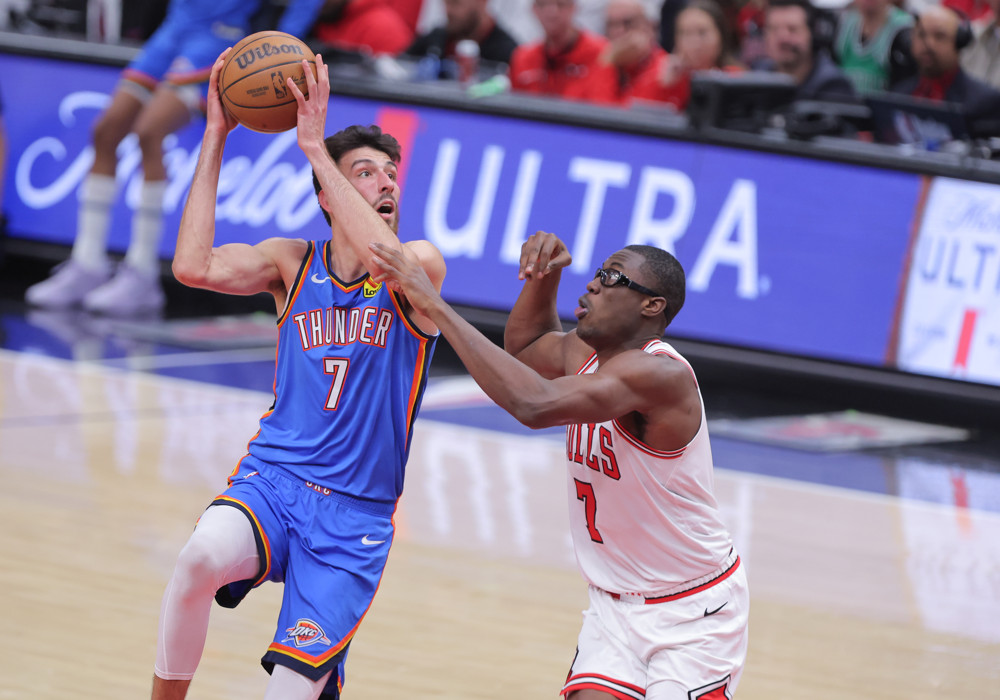
Injuries, decline, or simply reckless front-office decision-making can be to blame for the worst NBA contracts in 2025/26. Teams are protected from themselves with the Stepien Rule and maximum contracts, but there are still plenty of bad value contracts across the league.
A lack of availability (or at least a high injury risk) is a factor in many of these deals. In some cases, the team handed out a deal to keep their group together and probably knew it was an overpay. Others simply banked on the player developing.
Here are the 10 worst NBA contracts this season with the remaining years and dollars:
Domantas Sabonis – 3 years, $140,316,000
Domantas Sabonis was Third Team All-NBA in 2022/22 and 2023/24. He’s led the league in rebounds in each of the last three seasons and dabbled in taking more threes in 2024/25.
This could be a justifiable contract on a better-suited roster. Sacramento’s mismanagement has seen Sabonis get paired with DeMar DeRozan and Zach LaVine in some sort of peculiar tribute to the play-in Bulls.
One-way centers need a very specific roster construction around them. Sacramento has been nowhere near meeting that requirement since they acquired Sabonis from the Pacers four years ago.
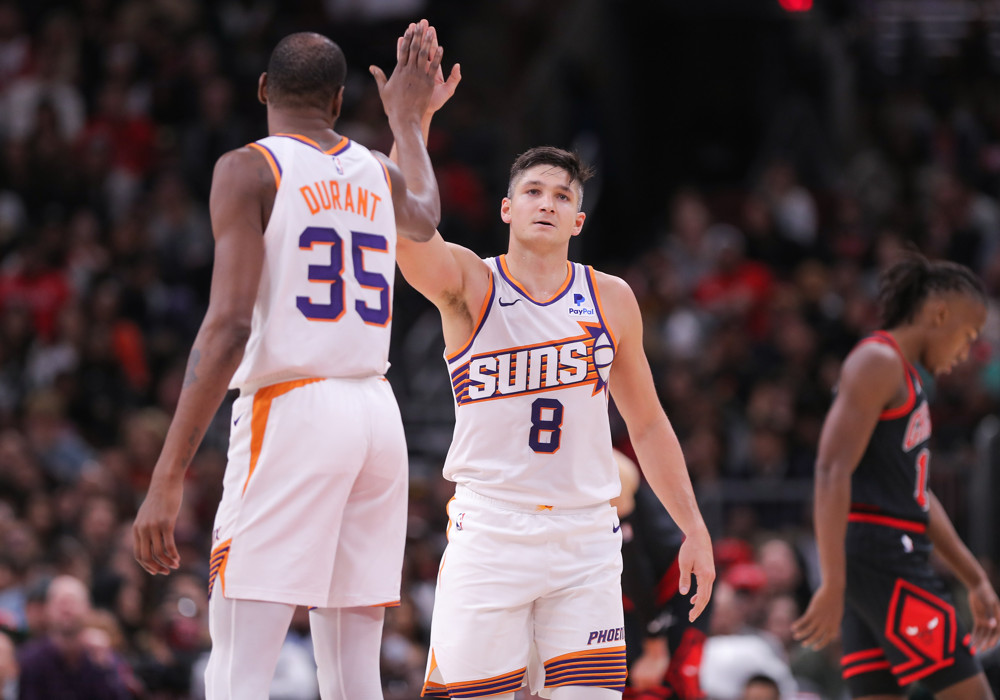
Grayson Allen – 3 years, $54,375,000
One of the league’s best perimeter shooters, it’s not that Grayson Allen is grossly overpaid, even if he takes his player option in 2027/28.
It’s more that this contract was reckless from Phoenix. Allen wasn’t the final puzzle piece for the Kevin Durant and Devin Booker-led Suns. He didn’t fix any of Phoenix’s major weaknesses, nor did he have the long-term upside to be worth such a long deal.
This deal is slightly less than Alex Caruso and Lu Dort by AAV.
Scottie Barnes – 4 years, $224,238,150
Since winning Rookie of the Year, Scottie Barnes hasn’t developed anywhere near as much as the Raptors required. His usage has increased slightly, but he remains a poor shooter, and his playmaking hasn’t improved much.
What is Barnes? Is he a second option on offense? He’s not going to be a go-to scorer, so where does he fit offensively? Does he need a shooting five next to him?
This contract is an overpay unless Barnes returns to All-Star form. As a pretty much non-shooter, the Raptors have to ensure the rest of the roster is packed with shooting. He’s got a long way to go before he’s close to value for money, and Franz Wagner and Cade Cunningham are much better players on identical contracts.
Zach LaVine – 2 years, $96,467,040
Last season was only the second time since 2016/17 that LaVine played more than 67 regular-season games. LaVine swapped the windy city for Sacramento, reuniting with DeRozan in the process.
There’s a reason the Bulls couldn’t trade LaVine for assets. His contract is crippling in the second apron era. A subpar defender and limited playmaker, he would be the third option on a title contender.
This contract is what a second option gets. The Kings have filled their cap sheet with some overpriced deals, and LaVine’s might be the worst of the lot.
Jordan Poole – 2 years, $65,892,857
The Pelicans made some curious decisions this offseason. Acquiring Jordan Poole wasn’t the most questionable of their moves, but it certainly raised a few eyebrows.
Poole just spent two years on the no-hope Wizards. Nothing was seen to suggest he’s any different from the streaky player we saw on the Warriors.
This is a lot of money from a shot-chucking guard. Poole projects as a sixth man long-term.
Dejounte Murray – 3 years, $96,773,681
The Poole trade was partly made because Dejounte Murray tore his Achilles in January. Initially expected to be sidelined until 2026, a video of Murray dunking over the summer gave hope he could return in the first half of the season.
This is the second serious injury of Murray’s career after he suffered a torn ACL in his early 20s. Recoveries from Achilles injuries are much better than they were in previous decades, but it’s still a concern for the Pels.
Murray is surely going to pick up the player option for 2027/28. His outside deserting him last season wasn’t ideal for pairing with Zion Williamson.
LaMelo Ball – 4 years, $168,705,600
LaMelo Ball averages 46.2 games per regular season. Charlotte hasn’t made the playoffs since he was drafted.
He fills the box score, but it’s fair to question whether LaMelo can impact winning. He’s a liability defensively, with his gambles to get steals and deflections distracting from a lack of focus. As a playmaker, he’s not as influential as he is entertaining.
Unavailable for way over half the games over the last three seasons, how can he be offering value on a contract of this size? Would any teams be jumping at the chance to trade for the former Rookie of the Year?
Kyle Kuzma – 2 years, $42,755,757
The Wizards and Bucks were better when Kyle Kuzma was off the floor last season. Washington was -21 per 100 possessions with Kuzma on the court.
His shooting regressed. He turned the ball over almost as frequently as he assisted, and he’s not the rebounder he was a couple of years ago, when he averaged 8.5 boards per game in his first season as a Wizard.
The money isn’t as damaging as others on this list, but the gap between Kuzma’s salary and his on-court value is enormous.
Paul George – 3 years, $105,792,470
Paul George’s first season in Philadelphia didn’t go to plan. He is clearly overpaid as he begins his age-35 season.
It’s worth remembering, though, that he was an All-Star in his final two seasons as a Clipper and wasn’t a million miles away from an All-NBA berth as recently as 2023/24.
The nature of acquiring stars in free agency is that the contracts often age badly. Daryl Morey and co. will hope George can repay their faith in him in 2025/26 or this could prove to be one of the worst contracts in NBA history.
Patrick Williams – 4 years, $72,000,000
Front offices sometimes seem obligated to pay their lottery picks. That must be how the Bulls decided to give Patrick Williams this deal.
Very passive offensively and never getting close to living up to the defensive reputation that saw him drafted fourth overall in 2020, Williams wouldn’t crack the rotation of most NBA teams.
Chicago doubled down on a draft mistake with a mega contract. It’s a deal that’s impossible to justify. They should have cut their losses and put it down to the weirdness that came with drafting in the middle of the pandemic.
Want more Sandman? Come connect with us here at sandmansports.com/onestopshop

Author