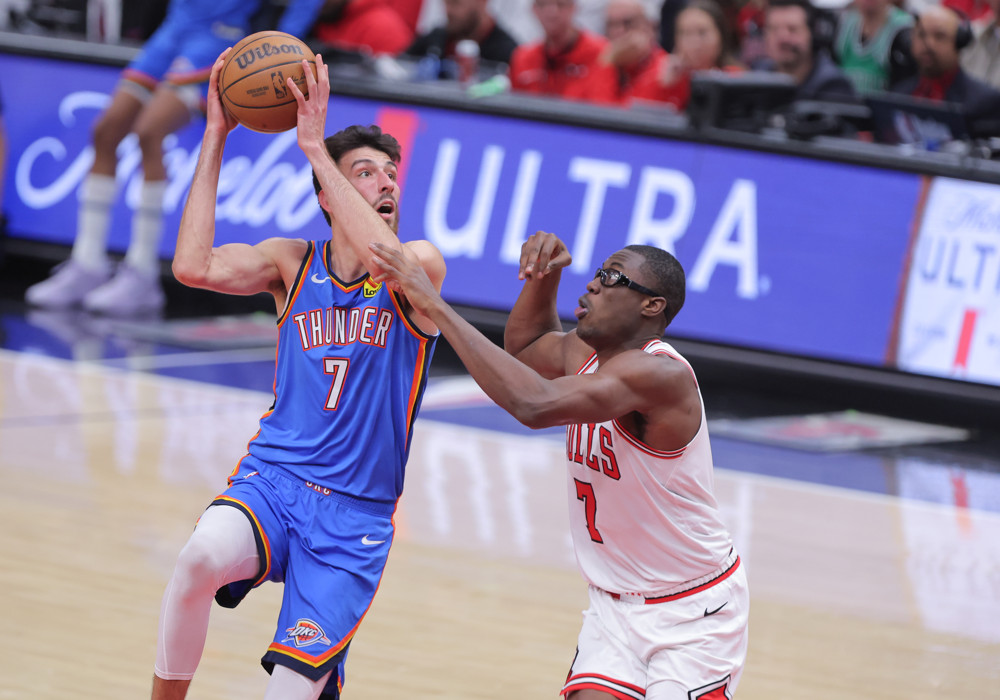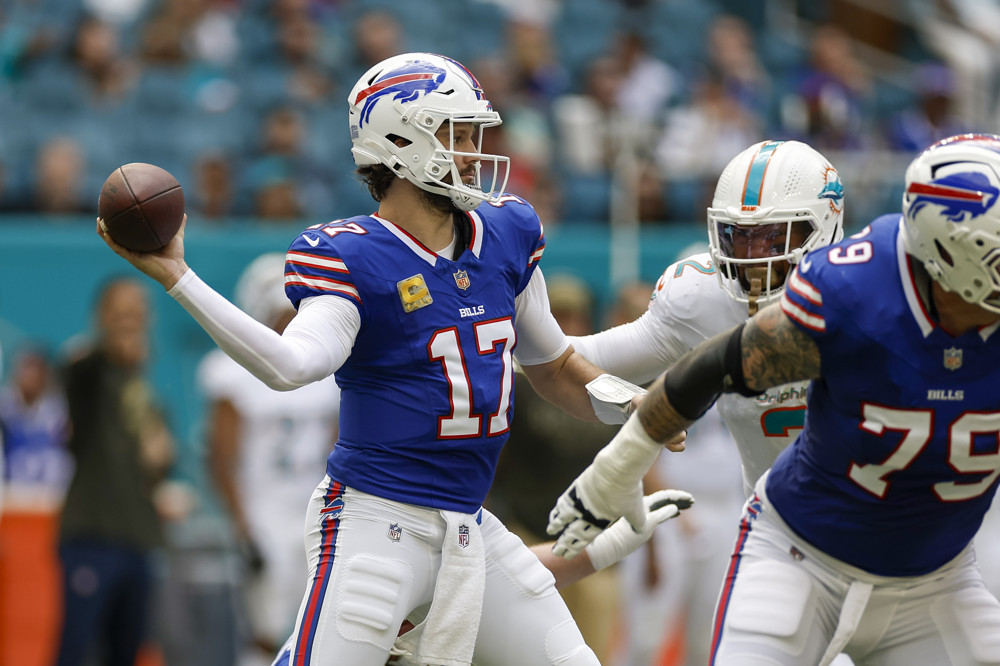
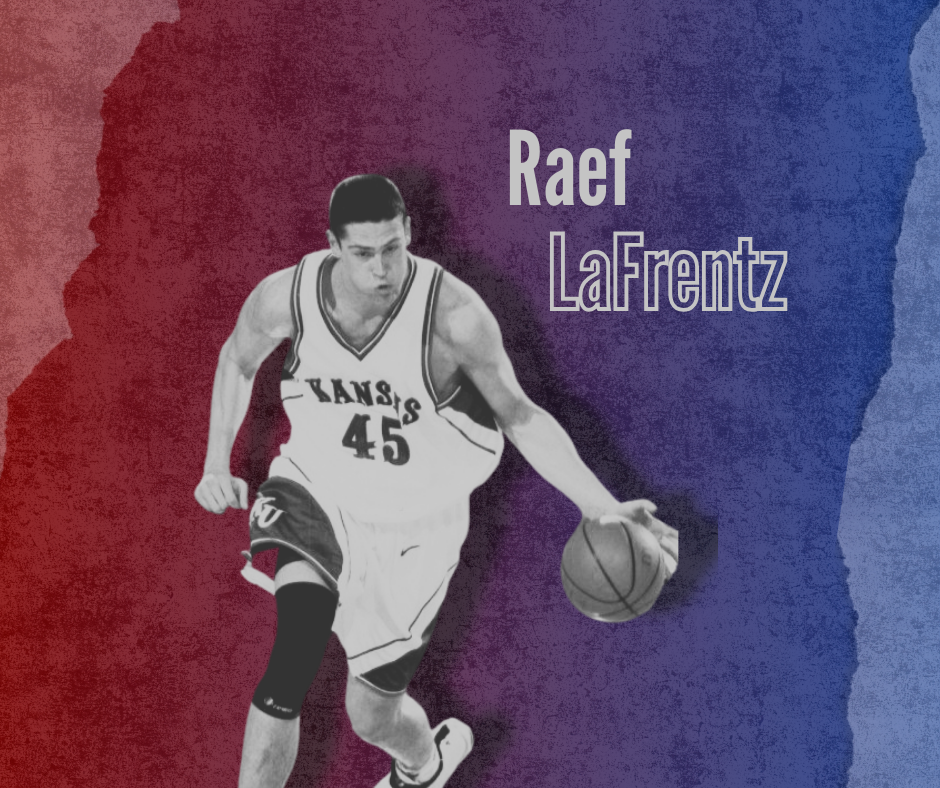
What does it mean for a player to be ahead of their time? Do they have a particular skill set that was overlooked? Is it the league climate that failed to maximize their strengths? Was it because they understood concepts about the game that only became accepted much later? Or were they simply more athletic than their peers?
The answer is rarely one thing. Often it is a mix of talent, circumstance, and perception. What it means to be ahead of one’s time varies across sports and across eras. Think of football, where it usually describes quarterbacks who either threw more often than their contemporaries or blended passing and rushing in ways that are now almost required at the position. Players like Steve McNair, Steve Grogan, and Randall Cunningham fit this mold. In baseball, the term often applies to hitters who emphasized on-base percentage or elevated launch angle well before those concepts were fashionable. Gene Tenace, a catcher with a .388 OBP, is a classic case. In basketball, it has most often been applied to three-point specialists like Dale Ellis or big men who could stretch the floor while still protecting the rim. That brings us to Raef LaFrentz.
Basketball has undergone a complete transformation over the last fifteen years. Analytics and modern spacing principles have reshaped how rosters are built and how the game is played. Archetypes that were once staples of the league have been eliminated. The midrange role player who lived between 15 and 20 feet is almost extinct. Slow, back-to-the-basket centers who only scored inside are liabilities when the postseason arrives.
In the modern NBA, a big man must bring one of two things: elite rim protection with the ability to survive on the perimeter, or the capacity to stretch the floor. The best do both. It is why the likes of Myles Turner, Chet Holmgren, Isaiah Hartenstein, Mitchell Robinson, Karl-Anthony Towns, and Evan Mobley have become such valuable commodities in recent playoff runs. Defense, three-point shooting, and passing are now the pillars of the position. Two decades earlier, Raef LaFrentz quietly embodied that combination, even if the league did not fully value it.
Kansas Years
LaFrentz arrived at Kansas in 1994 fresh off being named a McDonald’s All-American. He stayed four years and became one of the most decorated players in school history. By the time he graduated, he was second all-time in both points and rebounds. His efficiency stood out, as did his consistency, and he capped his college career by being named Big 12 Player of the Year in back-to-back seasons, edging out even his more famous teammate Paul Pierce.
LaFrentz’s dominance was not just statistical. He was the anchor of Kansas teams that routinely sat near the top of the national rankings. He became only the third player of the 1990s to be selected to multiple All-American teams. For all of Pierce’s NBA fame, at Kansas it was LaFrentz who was the more decorated player.
Early NBA Career
The Denver Nuggets made LaFrentz the third overall pick in the 1998 draft, selecting him seven spots ahead of Pierce. His rookie season started brightly before disaster struck: a torn ACL ended his year after just 12 games. That injury set back his development, but once healthy, LaFrentz began to carve out his niche.
He quickly proved himself as a shot blocker, ranking in the top ten in blocks per game for three straight seasons. He also displayed a willingness to shoot from deep that was unusual for big men of that time. In 2001 he authored a remarkable stretch, recording five games with at least five made threes and five blocks in the same contest. That record stood for two decades, only surpassed with the arrival of Victor Wembanyama.
These flashes showed the outline of a player who would have been treasured in the modern NBA: a rim protector with legitimate three-point range. At the time, however, his skills were still considered secondary to post scoring and rebounding.
Journeyman Years
After four years in Denver, LaFrentz was traded to Dallas in 2002, then to Boston in 2003, and later to Portland in 2006. Along the way he continued to show his unique mix of skills. In 2005, while with Boston, he went a perfect 7-for-7 from three in one half, setting an NBA record that lasted until Jalen Brunson broke it in 2023.
His counting stats were never eye-popping, and injuries limited his peak seasons. But for those who watched closely, there were nights when LaFrentz looked like a prototype of the stretch bigs who would dominate the league a decade later. He finished his career in 2008 after ten seasons, remembered more as a solid role player than as a pioneer.
How He Would Fit Today
In today’s NBA, LaFrentz would almost certainly be valued differently. His three-point attempt rate peaked at 32.7 percent, a figure that now looks modest compared to modern bigs who take more than half their shots from beyond the arc. Coaches in the 2000s did not encourage centers to live on the perimeter. With even modest adjustments to his shot profile, LaFrentz would likely have doubled his three-point volume.
Defensively, his rim protection was elite enough to keep him on the court in playoff settings, and his mobility was good enough to hold up in switches. Pair that with modern spacing systems designed to maximize shooters at all five positions, and LaFrentz would not just fit in. He would thrive.
Was He Ahead of His Time?
This brings us back to the central question. Was Raef LaFrentz truly ahead of his time?
There is an important distinction. Players who were genuinely ahead of their time are often forgotten because their skills were misunderstood or impossible to maximize within the rules of the day. The quarterback who could throw 40 times per game in the 1960s but never had a system to support it. The slashing guard who thrived before the three-point line was even invented. Those are players out of place in their own eras.
LaFrentz is different. His skills were always valuable. They just were not recognized to the extent they would be now. He was efficient, he was versatile, and he had nights where he looked like a star. What held him back was circumstance, injuries, and the league’s slower evolution.
So perhaps the better way to frame it is not that Raef LaFrentz was ahead of his time. Instead, he was a player whose value was underappreciated until the game evolved. His story is a reminder that the game does not always recognize true value in the moment. But in the end, history usually does.
Want more Sandman? Come connect with us here at sandmansports.com/onestopshop

Authors