Few conferences have matched the SEC’s consistency in producing NFL stars. Its running backs have carried more than just the ball; they’ve carried programs, defined eras, and filled highlight reels.
Similar to our recent ranking of the best NFL quarterbacks from each Big Ten school, this list focuses solely on what these players accomplished at the professional level. College success may be mentioned where it provides context, but the rankings themselves are based entirely on NFL performance.
So which SEC program can truly claim the title of “RBU”? Here’s our look at the best NFL running back from every SEC school, along with an honorable mention for each.
Alabama
Derrick Henry
Henry is one of the few active players who already feels like a lock for Canton. Since entering the league in 2016, he has been a force of nature. He won the Heisman Trophy in his final season at Alabama after rushing for 2,219 yards and 28 touchdowns. In the NFL, he has surpassed 11,900 rushing yards and is poised to become just the 33rd back in history to reach 12,000.
Honorable Mention: Mark Ingram
The first Alabama player ever to win the Heisman, Ingram carved out an excellent NFL career. Drafted by the Saints in 2011, he rushed for more than 6,000 yards and scored 50 touchdowns over 12 seasons.
Arkansas
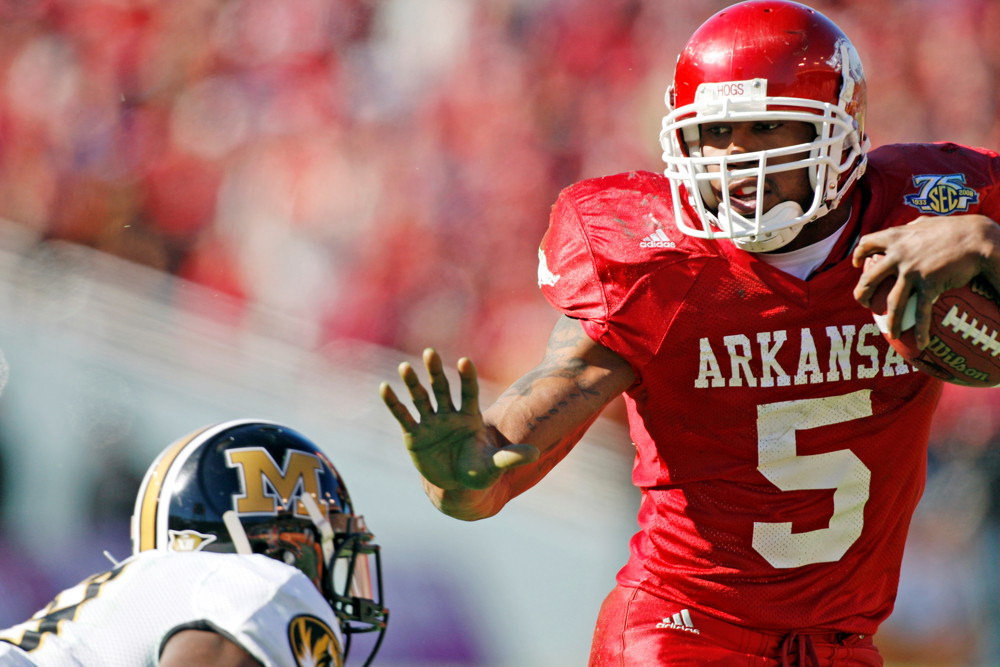
Darren McFadden
McFadden was electric at Arkansas, finishing as the school’s all-time leading rusher with 4,590 yards and back-to-back Heisman runner-up finishes. In the NFL, he ran for 5,421 yards and 28 touchdowns, including a 1,000-yard, 500-receiving-yard season in 2010 before injuries derailed his prime.
Honorable Mention: Barry Foster
Foster led the AFC in rushing in 1992 with 1,690 yards for the Steelers, a team record at the time. Though his career was brief, he totaled nearly 5,000 yards and 28 touchdowns.
Auburn
Bo Jackson
Jackson remains one of the greatest “what if” stories in sports history. He won the 1985 Heisman Trophy at Auburn after rushing for 1,786 yards and 17 touchdowns. Known for his legendary speed, he was drafted first overall by Tampa Bay but opted to play baseball before joining the Raiders. His NFL career was cut short by a hip injury, but his impact remains iconic.
Honorable Mention: Rudi Johnson
Johnson’s lone season at Auburn earned him SEC Offensive Player of the Year honors. He went on to a productive seven-year NFL career, mostly with the Bengals, finishing with nearly 6,000 rushing yards and 49 touchdowns.
Florida
Emmitt Smith
One of the greatest running backs of all time, Smith rushed for more than 1,000 yards in 11 straight seasons and retired as the NFL’s all-time leader with 18,355 rushing yards.
Honorable Mention: Fred Taylor
Taylor was one of the most consistent backs of his era, posting seven 1,000-yard seasons and 66 touchdowns in 13 years. His rookie season alone, with 1,200 rushing yards and 400 receiving, hinted at the player he would become.
Georgia
Herschel Walker
Walker’s dominance extended from Athens to the pros, where he rushed for 8,225 yards and 61 touchdowns across 12 seasons. He remains Georgia’s all-time leader in both categories.
Honorable Mention: Todd Gurley
A two-time NFL touchdown leader and 2017 Offensive Player of the Year, Gurley burned brightly and briefly. He finished with 67 touchdowns and remains among the top five in rushing scores since 2015 despite retiring five years ago.
Kentucky
Moe Williams
Kentucky has not produced many NFL backs, but Williams carved out a solid 10-year career, mostly with the Vikings, totaling 1,800 rushing yards and 21 touchdowns.
Honorable Mention: George Adams
A first-round pick in 1985, Adams had a promising rookie season with 498 yards before injuries slowed him. He finished with 886 career rushing yards.
LSU
Jim Taylor
The 1962 NFL MVP and Super Bowl I champion powered Vince Lombardi’s Packers with 8,597 rushing yards and 83 touchdowns. A Hall of Famer and four-time Pro Bowler, he set the early standard for LSU backs.
Honorable Mention: Leonard Fournette
Fournette was a playoff hero during Tampa Bay’s Super Bowl run, totaling 300 yards and three touchdowns that postseason. Across seven seasons, he produced 4,518 rushing yards and 34 touchdowns.
Mississippi State
Jerious Norwood
The pickings are a little slim for the Bulldogs, but Norwood tops the list from that school. Drafted by Atlanta in 2006, Norwood was a dangerous change-of-pace threat, rushing for more than 2,000 yards in six seasons.
Honorable Mention: Michael Haddix
Haddix was a dual-threat back for the Eagles and Packers, compiling 1,635 rushing yards and 1,310 receiving yards in his career.
Missouri
James Wilder Sr.
Wilder was a workhorse for the Buccaneers, posting 6,008 rushing yards and 37 touchdowns while adding more than 3,500 yards receiving. His nine-year run in Tampa remains one of the franchise’s most productive.
Honorable Mention: Tony Galbreath
A Super Bowl XXI champion with the Giants, Galbreath was one of the league’s early dual-threat backs, finishing with more than 4,000 rushing yards and nearly as many through the air.
Ole Miss
Deuce McAllister
A two-time Pro Bowler and Saints legend, McAllister topped 1,000 rushing yards four times and retired as the school and franchise’s all-time leading rusher.
Honorable Mention: BenJarvus Green-Ellis
“The Law Firm” was a steady, physical runner for the Patriots and Bengals, finishing with nearly 4,000 yards and 42 touchdowns.
Oklahoma
Adrian Peterson
A future Hall of Famer, Peterson ranks fifth all time with 14,918 rushing yards. The 2012 MVP and 2007 Rookie of the Year was the defining back of his generation.
Honorable Mention: DeMarco Murray
Murray led the league with 1,845 rushing yards in 2014, winning Offensive Player of the Year. In seven seasons, he scored 49 touchdowns and rushed for more than 7,000 yards.
South Carolina
George Rogers
The 1980 Heisman winner was taken first overall by the Saints and delivered immediately, rushing for 1,674 yards as a rookie. He later won a Super Bowl with Washington.
Honorable Mention: Duce Staley
A reliable all-around back, Staley topped 1,000 rushing yards three times with the Eagles and was part of the Steelers’ 2005 Super Bowl roster.
Tennessee
Alvin Kamara
One of the NFL’s most versatile playmakers, Kamara has topped 500 rushing and 500 receiving yards in four straight seasons and made five Pro Bowls. His six-touchdown Christmas performance in 2020 remains legendary.
Honorable Mention: Jamal Lewis
Lewis’s 2003 season, featuring 2,066 yards and Offensive Player of the Year honors, remains one of the best ever by an NFL running back.
Texas A&M
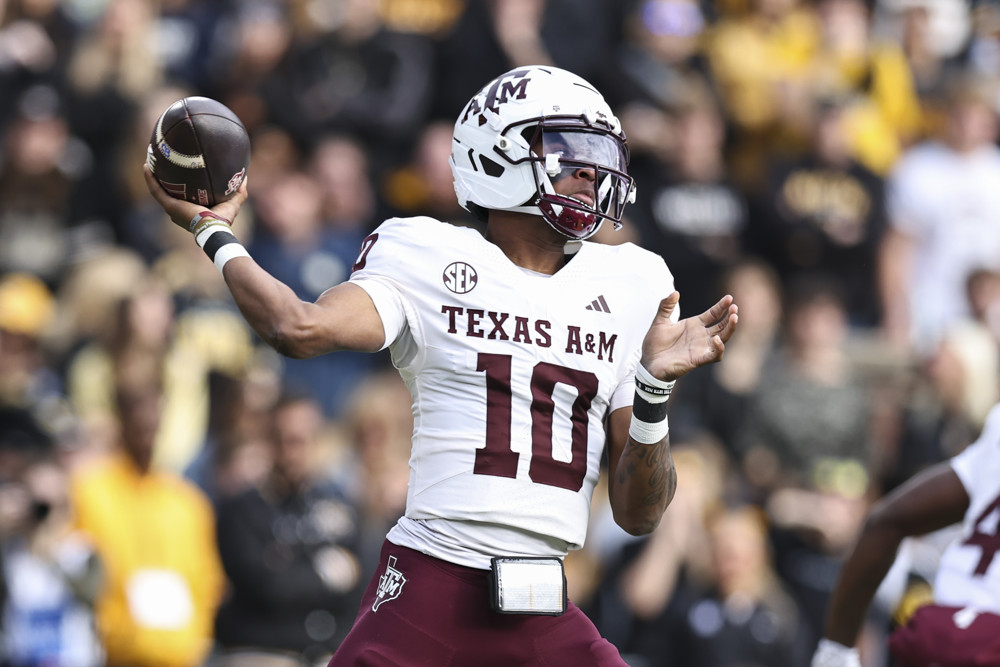
John David Crow
A Heisman winner and four-time Pro Bowler, Crow was one of the great all-purpose backs of his era, rushing for 4,963 yards and scoring 38 touchdowns from 1958 to 1968.
Honorable Mention: De’Von Achane
Achane’s young career has already been noteworthy. His elite speed and big-play ability have made him a breakout star for Miami, surpassing 2,000 rushing yards and 1,000 receiving yards early in his career.
Texas
Ricky Williams
The 1998 Heisman winner ran for more than 10,000 career yards after the Saints traded their entire draft to get him. Williams was dynamic, durable, and unforgettable.
Honorable Mention: Priest Holmes
An undrafted gem, Holmes became a superstar in Kansas City, rushing for nearly 6,000 yards in four seasons and redefining consistency and toughness at the position.
Vanderbilt
Zac Stacy
There aren’t many great options for the Commodores, but Zac Stacy earns the top spot. He played three seasons for the Rams and Jets and was productive when given opportunities, finishing his career with 1,355 rushing yards and nine touchdowns. While this list focuses on NFL success, it’s worth noting that Stacy was also Vanderbilt’s all-time leading rusher when he entered the league and remains the school’s top NFL producer at the position.
Honorable Mention: Ke’Shawn Vaughn
Vaughn showed flashes during his time with Tampa Bay, rushing for 388 yards and two touchdowns before being released by San Francisco this summer.
Want more Sandman? Come connect with us here at sandmansports.com/onestopshop

Author