#sandmansports | #greenjacketrewind | #mentalgame | #golfbettors
With summer ending and the 2025 golf season fading and rolling into exciting Ryder Cup play, Augusta National and the start of the season are so far in the rearview mirror, yet the milestone is never far away from any true golfer’s mind, pro or amateur. Each season really begins with the quiet hush through those towering Georgia pines, the dappled spring sunlight shifting much earlier in the day across undulating greens than it does today. Augusta National is more than a golf course; it is a stage where pressure and possibility collide, where the season and careers are defined, and where legends and sports history are made.
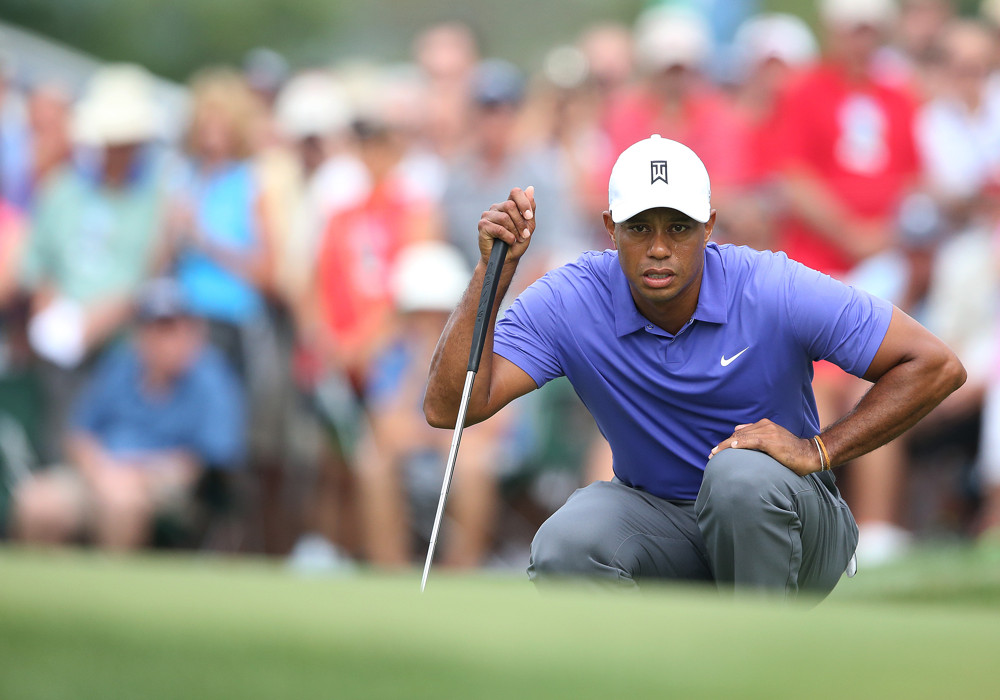
This is where Tiger Woods carved his name into immortality, and where the echoes of his five green jackets still hang in the Georgia air like a song you cannot quite stop humming. Tiger arrived at Augusta in 1997 like a comet breaking the night sky. At just 21 years old, he dominated the field in a way that felt surreal, winning by 12 strokes. It was not just a victory, it was a declaration. He became the youngest Masters champion in history and the first African-American player to win at Augusta, changing the face of the game forever. The way he strode through Amen Corner that Sunday, cool, composed, entirely locked in, announced that a new era in golf had begun.
By 2001, the myth of Tiger Woods had become the reality. That April, he came to Augusta ready to make history, and he left having completed what became known as the “Tiger Slam,” holding all four major championships consecutively between May 2000 and April 2001. This means when he arrived in Augusta, he had already won the PGA Championship, played in May the prior year, and which regularly features one of the deepest fields of the season on some of the best courses in the United States. He also won the 2000 U.S. Open, held each June, which tests players on the most punishing setups imaginable, again rotating on some of the most challenging courses. And finally, he took home the 2000 Open Championship, better known as the British Open, the oldest major demanding mastery of links golf and the ability to rise despite unpredictable weather on some of golf’s most infamous courses like St Andrews, Royal Troon, and Carnoustie.. Tiger’s sweep included the 2000 U.S. Open at Pebble Beach, the 2000 Open Championship at St Andrews, the 2000 PGA Championship at Valhalla, culminating with the 2001 Masters at Augusta, cementing another place in golf history.
It was dominance at its most clinical. There was no flash in his demeanor, no wasted motion in his swing. Every step, every shot was controlled and deliberate. It was Tiger the machine, all pistons firing, dismantling pressure like it was a child’s toy.
In April 2002, he returned to Augusta and did what so few have ever done: he defended his title. Back-to-back Masters wins are still rare, and up until that year only the Golden Bear, Jack Nicklaus (1965-1966), and Nick Faldo (1989-1990) had accomplished the feat, but Tiger made it look inevitable, cementing his reign over Augusta and the golf world by being the third player to do so. Competitors paired with him on Sundays often admitted to feeling a shift in their games; statistically, their scores worsened by nearly half a stroke when Tiger was in their group. That was not a coincidence. It was his presence, the Tiger effect.
Then in 2005, Tiger created one of the most iconic moments in Masters history. Standing on the par-3 16th, known as Redbud, Tiger faced an impossible chip from above the green, perched on the slope with Rae’s Creek shimmering below. He settled in, visualized the shot, and rolled the ball perfectly along the ridge. For a breathless second, it clung to the lip of the cup as if Augusta itself was holding its breath, and then it dropped. The roar was seismic, a sound that rippled through the course. Tiger went on to claim his fourth green jacket, and the shot became the image that defined a generation of Masters memories.
And then came 2019, the comeback no one saw coming. Eleven years after his last major win, after four back surgeries, after a divorce and more tabloid coverage than most people experience in a lifetime, after being counted out by nearly everyone, Tiger found something within himself at Augusta. At forty-three, he walked down that 18th fairway to the sound of thousands chanting his name, his kids waiting greenside to witness his fifth Masters victory. It was not just a return to form, it was a reclamation of legacy. On one Sunday afternoon, he reminded the world why Augusta, more than any other place, seems to bend to his will. Only the Golden Bear has won more Masters titles, having won his sixth in 1986.
Tiger’s brilliance at Augusta was not just about physical mastery. His mental game was, and remains, his superpower. From childhood, his father, Earl Woods, trained him to handle pressure and introduced him to sport psychologist Dr. Jay Brunza, using visualization techniques, focus drills, and even hypnosis to build resilience. Later in his career, Tiger leaned on sport psychology, often working privately with mental coaches who taught him to let go of mistakes, stay present, and regulate emotion under intense scrutiny. Golf is a game where perfection does not exist, yet Tiger’s process-driven routine, shot by shot and hole by hole, made imperfection irrelevant. When others cracked under Augusta’s weight, Tiger had the mental skills locked and loaded to face the eye of the storm.
For bettors, Tiger’s relationship with Augusta has always offered lessons. Backing him in his early years often felt like free money, similar to betting Scheffler today. In 1997, pre-tournament odds hovered around +500; a hundred-dollar ticket returned six. By 2001 and 2002, his dominance shrank the numbers to +250 or less, short odds, yes, but reliable returns. In 2005, you could get him around +200. And then came 2019, when Tiger’s comeback sent sportsbooks scrambling; at +2200, a $100 bet turned into $2,200 and one of the most unforgettable paydays in golf betting history.
For today’s bettors, the takeaway is clear: dominance cycles like Tiger’s, and now Scottie Scheffler’s, can offer dependable returns when form and mindset align. Long shots with compelling narratives, like Tiger’s 2019 win, are worth taking a look at but only in rare cases. And above all, back players whose mental games are built for Augusta’s unique pressure, like Rory McIlroy this year.
Tiger will turn fifty this year and is recovering from a ruptured Achilles surgery in March of this year, and is unlikely to chase another jacket in April 2026. He has not played competitively in a major since 2022, but his influence on the game is everywhere, from shaping the PGA Tour’s evolving landscape to mentoring the next wave of stars. He does not need to compete to exist within the PGA ecosystem; Tiger is well embedded in the heart of golf. If he has taught us anything, however, it is never count him out.
And yet Augusta has a way of creating new legends. As the 2026 Masters approaches, Scottie Scheffler sits atop the betting boards for next year at +400, chasing his third green jacket in five years. Rory McIlroy (+550), fresh off his 2025 win, is right behind him, hungry for more. The names change, the narratives evolve, but chasing Augusta magic and glory is one PGA constant that this writer hopes never changes.
If you enjoyed this article, you may want to check out these too:
Green Jacket Rewind: Scottie Scheffler
Girls Night Out: Fantasy Football Math
Girls Night Out: Fantasy Football Basics
Want more Sandman? Come connect with us here at sandmansports.com/onestopshop

Author